
Treatment for OCD
If you're living with obsessive-compulsive disorder (OCD), you may have spent countless hours trying to figure out why certain thoughts won't go away, why reassurance never seems to last, or why the things you do to feel better often leave you feeling stuck in the same cycle. Many people with OCD feel exhausted by the constant mental effort of managing uncertainty, intrusive thoughts, and compulsive behaviors.
This page will cover the evidence-based approaches that can help you better understand your symptoms, reduce the impact OCD has on your life, and develop a healthier relationship with uncertainty.
Is OCD Treatable?
Yes! OCD is considered a highly treatable mental health condition when the right treatment is provided. This means treatment that is less focused on getting rid of intrusive thoughts and more on changing how you respond to them.
The truth is, most people experience unwanted, strange, or disturbing thoughts from time to time. The presence of these types of intrusive thoughts doesn’t indicate a diagnosis of OCD. Instead, it’s the meaning that you assign to them and the behaviors that follow which can indicate you might meet the criteria for a diagnosis of OCD.
Therapy for OCD can teach you that these thoughts do not need to be analyzed, neutralized, or solved. Instead, healing often involves increasing your tolerance of uncertainty without engaging in compulsive behaviors.
Building tolerance for uncertainty can reduce anxiety, lessen the intensity of obsessions, and increase confidence in your ability to sit with discomfort.
What Is ERP Therapy?
Exposure and Response Prevention (ERP), is widely considered the gold-standard treatment for OCD.
ERP helps you to gradually face situations, thoughts, images, sensations, or uncertainties that trigger OCD while resisting the urge to engage in compulsions.
Just reading about this may sound intimidating. It’s important to know that ERP is typically collaborative, gradual, and tailored to your needs and goals. You won’t be forced into frightening situations or be asked to confront your worst fears immediately. Again, the idea is to slowly build your tolerance for fear and uncertainty, not overwhelm you and your nervous system.
How ERP Works
OCD often follows a predictable cycle:
An intrusive thought, feeling, or trigger occurs.
Anxiety, guilt, disgust, or uncertainty increases.
A compulsion is performed to reduce distress.
Temporary relief occurs.
The cycle repeats.
While compulsions often provide short-term relief, they unintentionally teach your brain that the feared situation was dangerous and required intervention. ERP works by interrupting this pattern.
Rather than responding to anxiety with compulsions, you’ll practice remaining present with uncertainty and allowing anxiety to rise and fall naturally.
Over time, your brain learns several important lessons:
Anxiety is temporary.
Uncertainty can be tolerated.
Intrusive thoughts do not require action.
Compulsions are not necessary for safety.
Examples of ERP
ERP exercises look different depending on your symptoms:
For someone with contamination OCD, ERP may involve touching an object they perceive as contaminated without engaging in excessive washing.
For someone with Relationship OCD, ERP may involve resisting the urge to analyze their feelings toward a partner or seek reassurance about the relationship.
For someone with Health OCD, ERP may involve noticing bodily sensations without immediately researching symptoms online.
The goal is to increase one's willingness to live with uncertainty while reducing compulsive responses.
To learn more about the different subtypes of OCD, click here.
Inference-Based Cognitive Behavioral Therapy (I-CBT) for OCD
Inference-Based Cognitive Behavioral Therapy (I-CBT) is an evidence-based treatment developed specifically for OCD. While traditional CBT often focuses on challenging or reframing the content of thoughts, I-CBT focuses on how obsessional doubt develops in the first place.
OCD can pull you away from information available in the present moment and into an imagined possibility or feared story. For example, you may begin questioning whether you caused harm, overlooked a danger, or made the wrong decision, even when there is no direct evidence that something is wrong.
I-CBT can help you recognize:
The initial doubt that begins the OCD cycle
The imagined story supporting the doubt
When OCD is dismissing information from your senses or lived experience
The feared version of yourself OCD suggests you could become
The difference between reality-based uncertainty and obsessional doubt
The goal is not to prove that your fear is impossible or achieve complete certainty. Instead, I-CBT helps you recognize when OCD has moved beyond present-moment evidence, return to reality-based reasoning, and build greater trust in your own judgment.
I-CBT may be used on its own or alongside ERP, depending on your symptoms, treatment history, and individual needs.
Acceptance and Commitment Therapy (ACT) for OCD
ACT has become increasingly popular as another complement to ERP. ACT focuses on helping you to accept and tolerate difficult thoughts, emotions, and experiences rather than attempting to eliminate them.
If you’re struggling with OCD, you may find that you’re feeling trapped in a struggle against your thoughts. You want to make thoughts disappear. You work to prove the thoughts aren’t true. You find ways to increase your certainty around a given thought process. You’ll do anything to eliminate the anxiety that comes with these thoughts. Unfortunately, these efforts often keep OCD going. This is why ACT encourages a different approach.
Instead of asking: "How do I make this thought go away?" ACT encourages questions like: "Can I make room for this thought without letting it control my behavior?"
ACT helps clients develop psychological flexibility, mindfulness, values-based decision making, acceptance of uncertainty, and a willingness to experience discomfort.
Can Internal Family Systems (IFS) Help OCD?
IFS views different thoughts, emotions, and behaviors as “parts” of ourselves that have developed to protect us in some way. For individuals with OCD, IFS can sometimes help foster greater self-compassion and understanding of the emotional experiences that exist underneath symptoms.
Individuals with OCD can find IFS helpful as part of a broader treatment plan. Because OCD often requires behavioral change and direct work with compulsions, IFS alone may not be sufficient treatment for OCD. That said, it can be effective for therapists integrate ERP with IFS-informed work to help clients address shame, self-criticism, or underlying emotional experiences that may accompany OCD.
Does OCD Require Medication?
In short, no. Recovery from OCD does not require medication.
Many individuals with OCD can see significant improvement through therapy alone. However, medication can be an important and effective tool for some people.
Medication may be considered when symptoms are severe and significantly interfere with daily functioning, therapy progress is limited by symptom intensity or begins to stall, or depression, anxiety or other mental health concerns are also present.
The right treatment plan depends on your symptoms, goals, history, and preferences.
Why OCD Recovery Is About Learning to Tolerate Uncertainty
OCD asks questions that leave room for uncertainty:
What if I hurt someone?
What if I don't really love my partner?
What if I'm missing a serious illness?
What if this thought means something?
What if I'm making the wrong decision?
OCD Treatment helps individuals learn that the goal is not to become certain—it is to become willing to live without certainty.
This shift can feel uncomfortable at first, but leaning into it can reduce compulsive checking, reassurance seeking, researching, analyzing, or avoiding.
What Does OCD Recovery Look Like?
People in recovery often continue to experience intrusive thoughts from time to time. The difference is that those thoughts no longer create so much distress, and they no longer dictate their behavior. Recovery looks like:
Spending less time ruminating
Seeking less reassurance
Reduced avoidance
Greater confidence in handling uncertainty
Increased engagement in relationships and meaningful activities
Less fear of thoughts and emotions
Progress is rarely linear. There may be setbacks, difficult periods, and times when symptoms temporarily increase.
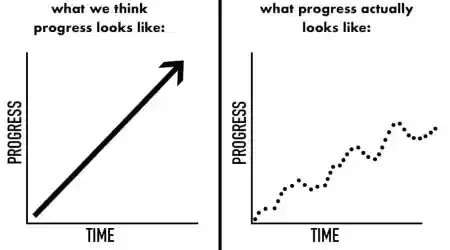
However, with consistent treatment and support, many people experience substantial improvement in their quality of life.
Finding the Right OCD Therapist
Because OCD can sometimes be misunderstood or mistaken for generalized anxiety, it can be helpful to work with a provider who has experience treating OCD specifically.
When looking for an OCD therapist, consider asking:
What experience do you have treating OCD?
What types of therapy do you use to treat OCD?
How do you approach compulsions and reassurance seeking?
How do you help clients build tolerance for uncertainty?
A therapist who understands the unique ways OCD operates can help you develop a treatment plan tailored to your needs and goals.
Living with OCD can feel isolating, especially when intrusive thoughts or compulsive behaviors seem difficult to explain to others. The good news is that effective treatment exists. With the right support, you can learn to step out of the OCD cycle, build confidence in your ability to tolerate uncertainty, and spend more of your time focused on the things that matter most to you.
Reach out to us today to begin treatment for OCD.