
Performance Anxiety
Performance anxiety doesn’t discriminate - people of all ages, professions, and backgrounds can experience that fear of making a mistake and being judged or ridiculed for it. Whether someone is stepping onto a stage, stepping out onto a field, leading a meeting, or even answering a teacher’s question in front of the class, the nerves can feel overwhelming.
Despite the fact that performance anxiety is so widespread, it’s often misunderstood. People assume that these nervous feelings are “silly,” or something they can simply push past. In reality, performance anxiety is a much more complex mind-body experience that can truly impact an individual’s functioning and confidence. The good thing is, performance anxiety can be improved through practical strategies, emotional support, and professional guidance.
Keep reading to learn more about what exactly performance anxiety is, how it differs from other forms of anxiety, why someone might experience performance anxiety, and how therapy and mental health strategies can help individuals to overcome it.
What Is Performance Anxiety?
Performance anxiety refers to the physical, emotional, and cognitive symptoms that arise when a person believes they are being scrutinized by others. These symptoms don’t always show up prior to a performance or event, sometimes they can come up during or after the performance or event as well.
Common situations that trigger performance anxiety include:
Public speaking
Job interviews
Test-taking and academic evaluations
Sports competitions
Performing arts (i.e. music, theater, dance)
Workplace presentations and leadership roles
Group social interactions with perceived judgment
Creative work that involves external feedback
The truth is, performance anxiety has nothing to do with lack of ability. In fact, many high-achieving, well-prepared and skilled individuals can experience performance anxiety the most. Why might that be? Because performance anxiety is a result of an individual’s perception and belief system in the face of pressure, rather than their behavioral abilities, their preparedness, or their talent.
The Mind-Body Cycle of Performance Anxiety
To understand why performance anxiety can feel so intense, it can help to review the Cognitive-Behavioral Therapy cycle below:
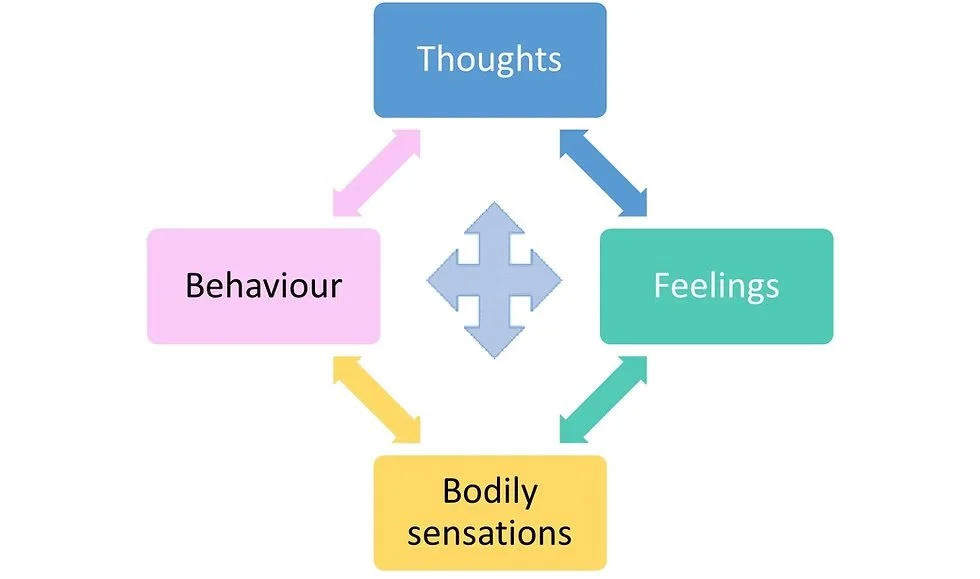
The situations an individual enters impacts their thoughts, feelings, behaviors and bodily sensations. Let’s break this down further. Imagine someone is heading into an important meeting at work:
1. Thoughts: “What if I mess up?”
Performance anxiety often begins with anticipatory worry. Common mental patterns for this employee might include:
Assuming the worst case scenario will happen
Doubting one’s own abilities
Thinking they have to perform perfectly “or else”
Replaying negative fantasies about failure or embarrassment
Comparing oneself to their colleagues
Feeling pressure to maintain a certain reputation
These thoughts signal that this meeting is risky, even though the situation isn’t physically threatening.
2. Emotions: Fear, dread, shame
Once the employee’s mind marks something as risky, emotional reactions follow. This employee might feel:
Fear of judgment
Pressure to succeed
Embarrassment before anything has gone wrong
Shame or guilt about not performing “perfectly”
Hopelessness about being unable to control the anxiety
These emotional cues further activate the nervous system.
3. Physical symptoms: “My body is betraying me.”
Performance anxiety is closely tied to the body’s fight-or-flight response. Common physical reactions include:
Rapid heartbeat
Shaking or trembling
Dry mouth
Sweating
Shortness of breath
Gastrointestinal discomfort
Muscle tension
Feeling mentally “blank”
These physical sensations can then feed back into the anxious thoughts—creating a loop that intensifies the distress right when the person wants to feel their best.
4. Behaviors: Overcompensation or avoidance
In response to these thoughts, feelings and physical sensations, the employee might attempt to appear overly confident as a means to hide their performance anxiety. Alternatively, they might shut down and flounder in the face of the pressure. Some behavioral reactions might look like:
Avoiding situations where evaluation is possible
Over-preparing to the point of burnout
Procrastinating because the anxiety feels overwhelming
Seeking excessive reassurance
Relying on rituals or safety behaviors (e.g., rereading notes dozens of times)
Withdrawing socially or professionally
“Masking” anxiety with perfectionism or overachievement
Over time, these behaviors train the brain to stay anxious by reinforcing the idea that performance situations are unsafe.
What Causes Performance Anxiety?
Performance anxiety develops from various factors - biological, psychological, and environmental. Each person has their own triggers and history, though common contributing elements include:
Biological Influences
High sensitivity to stress or threat
Genetic predisposition to anxiety
A naturally activated nervous system
Hormonal changes or chronic stress patterns
Psychological Influences
Perfectionism or people-pleasing tendencies
Fear of failure (or fear of success)
Low self-esteem
Past negative experiences—like a performance going poorly
High inner critic or negative self-talk
Environmental Influences
Pressure from family, coaches, workplace cultures, or peers
Public or competitive environments
High expectations without adequate support
Social media comparison
Cultural or gender norms that punish mistakes
Performance Anxiety vs. Social Anxiety: How Are They Different?
Performance anxiety and social anxiety have a lot of similarities, yet they are different. Let’s review these differences:
Performance Anxiety
Performance anxiety is triggered by specific situations in which a person perceives themselves to be evaluated or judged by others. These situations, and therefore the anxiety, is often temporary. Sometimes the anxiety disappears once the performance begins, other times, anxiety can occur after the performance, when reviewing the performance leads to fear of judgement. This form of anxiety can occur even in people who are confident or comfortable in social settings.
Social Anxiety Disorder
Social anxiety is oftentimes much broader and more pervasive. It can occur more consistently across settings, and isn’t limited to performances. Oftentimes, those with social anxiety fear everyday social interactions, like calling a restaurant to order takeout or interacting with a classmate between classes. Since this form of anxiety is so pervasive in one’s life, it can often lead to longer lasting avoidance of social situations as a means to reduce the anxiety and seek more emotional comfort. Because of this, social anxiety often disrupts an individual’s relationships and ability to function in interpersonal settings, like work or school.
In other words, performance anxiety is situational; social anxiety is relational.
Both can coexist, but someone may be a confident communicator socially and still experience panic before public speaking—or vice versa.
How Performance Anxiety Affects Everyday Life
Many people think performance anxiety only matters when preparing for a big event. But its effects are far-reaching and can subtly shape daily behaviors, decisions, and self-perception.
Emotionally, performance anxiety means increased worry or dread leading up to important events, feelings of shame or demoralization after said events regardless of the outcome, increased self-criticism and feelings of disconnect from one’s own capabilities.
Behaviorally, performance anxiety leads to avoidance of public speaking or leadership opportunities, burnout as a result of over-preparing for events, procrastination on high visibility tasks, and withdrawal from social situations in which evaluation might occur.
Performance anxiety can affect individuals professionally when individuals turn down promotions to avoid fear of failure, struggle in interviews, and have difficulty expressing or presenting great ideas in front of other colleagues and leaders.
Lastly, performance anxiety can impact someone physically. Performance anxiety can contribute to chronic muscle tension, sleep disturbances, panic attacks, and exhaustion from prolonged exposure to stress.
Addressing performance anxiety doesn’t just improve performance, it improves overall well-being and quality of life.
Performance Anxiety in Athletes and High Performers
Athletes, performing artists, healthcare workers, therapists, teachers, and business leaders often face a unique type of pressure: their identity is deeply tied to performance.
This can make anxiety feel not just stressful, but personal.
For Athletes
Performance anxiety can show up as “the yips,” overthinking during competition or even practice, feeling paralyzed or more cautious after mistakes, and even loss of enjoyment in playing the sport. What often makes matters worse is the idea that athletes must be “mentally tough.” When an athlete equates performance anxiety with weakness, it breeds shame.
For Professionals
In workplace settings, performance anxiety often includes fear of speaking up in meetings, hesitation around taking on new roles or responsibilities, and doubting one’s experience and competence despite a strong track record. Professionals of all levels can feel overwhelmed by their symptoms of performance anxiety before each event.
The great thing is, learning mental skills can help build confidence and regulate the body’s response to performance anxiety.
How Therapy Helps Treat Performance Anxiety
Therapy is incredibly effective at reducing performance anxiety and building long-term confidence. It starts with the recognition and acceptance that the goal is not to eliminate nerves entirely. Why is that? Because feeling some degree of nervousness or activation can actually be really beneficial. Plus, it’s totally normal. Instead, the goal of therapy for performance anxiety is to help individuals shift from an overwhelming amount of anxiety to an optimal amount of nervous energy and activation.
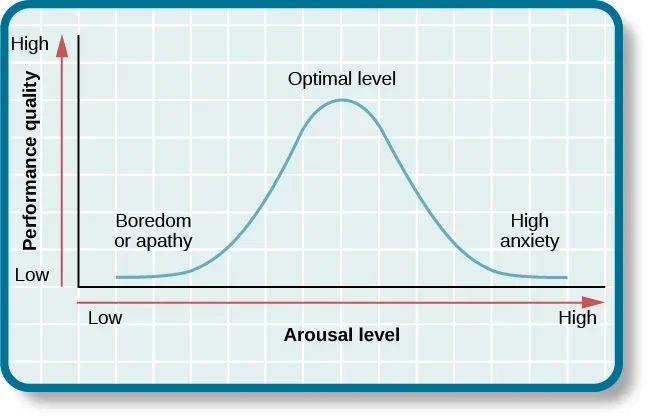
Here are some of the most commonly used therapeutic approaches.
1. Cognitive Behavioral Therapy (CBT)
CBT helps people understand how thoughts, emotions, and physical sensations interact. Therapists help clients to identify triggering thoughts, challenge irrational or catastrophic assumptions, turn negative self-talk into positive self-talk, build confidence rooted in evidence, and shift goals from perfectionism to realistic excellence. CBT is especially effective for people whose anxiety is driven by internal pressure or mental rehearsal of negative outcomes.
2. Mindfulness and Body-Based Approaches
Performance anxiety is deeply tied to physiological arousal. Mind-body strategies help retrain the nervous system to tolerate—and eventually thrive in—evaluative situations. Skills discussed in therapy may include breathwork to regulate one’s response to stress, grounding techniques to help individuals stay in the present moment, body scans to reduce muscle tension, and mindfulness techniques to increase awareness of thoughts and decrease reactivity to thoughts. These skills are immensely helpful for people whose anxiety shows up as physical discomfort or panic-like symptoms.
3. Exposure and Response Prevention (ERP)
Therapists help clients practice the very situations that trigger anxiety, gradually and safely.This can look like role-playing an interview, watching a simulation of a stressful presentation, visualizing high-pressure performances or actively engaging in events that promote performance anxiety. Oftentimes anxiety leads to avoidance, because not facing the anxiety-provoking event feels reassuring, at least in the short-term. Exposure builds an individual’s stress resilience. It teaches the brain that an individual is safe, despite the stress, and that anxiety does not prevent success.
4. Acceptance and Commitment Therapy (ACT)
Acceptance and Commitment Therapy helps individuals relate differently to their anxious thoughts and physical sensations, rather than trying to eliminate or suppress them. Instead of fighting anxiety, clients learn to notice it, make space for it, and reconnect with what matters most in the moment—such as performing with clarity, staying grounded in values, or showing up fully for a meaningful goal. ACT teaches cognitive defusion (creating distance from unhelpful thoughts), mindful acceptance of emotions, and committed action aligned with personal values. For people with performance anxiety, this approach reduces the struggle with internal experiences and frees up mental space to stay present, focused, and effective during high-pressure situations.
5. Mental Skills Training
For athletes and high-performing professionals, mental skills training expands on traditional therapy by teaching performance-specific strategies, such as pre-performance routines, imagery and visualization, concentration and attentional control, goal setting, emotion regulation, and managing energy and arousal levels. These skills not only reduce anxiety—they enhance overall performance.
When Should Someone Seek Help?
It’s time to seek support if performance anxiety is interfering with your work, relationships or daily life. If you find that you’re avoiding opportunities that you’d actually like to pursue, or that the only way you feel ready for a performance is by preparing until you’re on the brink of burnout, these are signs that your performance anxiety is overwhelming, rather than helpful. Additionally, if you find that the physical symptoms of performance anxiety are so intense that they feel unmanageable, that’s another sign that it might be time to learn some skills from a mental health professional to better manage your symptoms.
What to Expect in Therapy
Therapy provides a safe, nonjudgmental environment to explore fears, build skills, and practice new behaviors. Clients can expect:
An individualized approach
Everyone’s triggers and patterns are different. A therapist assesses your history, goals, and current challenges to tailor the process.
Skill-building
Therapy can be active and practical. You’ll learn strategies that you can use at home, at work, and before high-pressure situations.
Actionable steps
Therapists oftentimes provide homework to help you apply new skills outside of sessions.
Confidence that grows over time
Everyone is different, but many clients notice improvement within weeks, even if full transformation takes longer. Therapy helps the brain create new, more confident habits.
Frequently Asked Questions About Performance Anxiety
Is performance anxiety normal?
Absolutely. Most people will experience some level of performance anxiety throughout their lifetime. In fact, many high achievers experience performance anxiety frequently. It’s not always easy to spot when someone has performance anxiety, which makes it easy to assume that we are alone in our experience of it. But you are not alone, and performance anxiety can improve with treatment.
Will therapy make me less nervous before events?
There are many therapeutic approaches that are evidence-based and proven to help reduce excessive anxiety. By learning skills and building awareness, you can improve your ability to face performance anxiety and transform those nerves into helpful energy.
Can performance anxiety come from past experiences?
Even a single negative event can lead to performance anxiety in the future. As humans, we tend to focus on the negative experiences - we over-inflate them in our memories and neglect to consider our past successes and current strengths. Therapy can help to refocus on those successes and build new skills for confidence.
Can children or teens experience performance anxiety?
Yes, especially students, young athletes, and teens in creative or competitive environments.
Do I need to be an athlete or performer to benefit from mental skills training?
Not at all! Mental skills are powerful tools for anyone who faces high-pressure moments, including corporate leaders, students, healthcare workers, and everyday professionals.
Getting Started: Support for Performance Anxiety
Experiencing performance anxiety does not mean that you are weak or incapable, it just means that you are human! Your mind and body perceive pressure and fear scrutiny with great intensity. With mental health support, the intensity of that pressure and fear can be reduced, leading to confidence and peace of mind when facing a performance.
When you’re ready, reaching out through our online inquiry form to begin therapy or mental skills training can make an enormous difference in how you feel, perform, and show up in your work and life.